
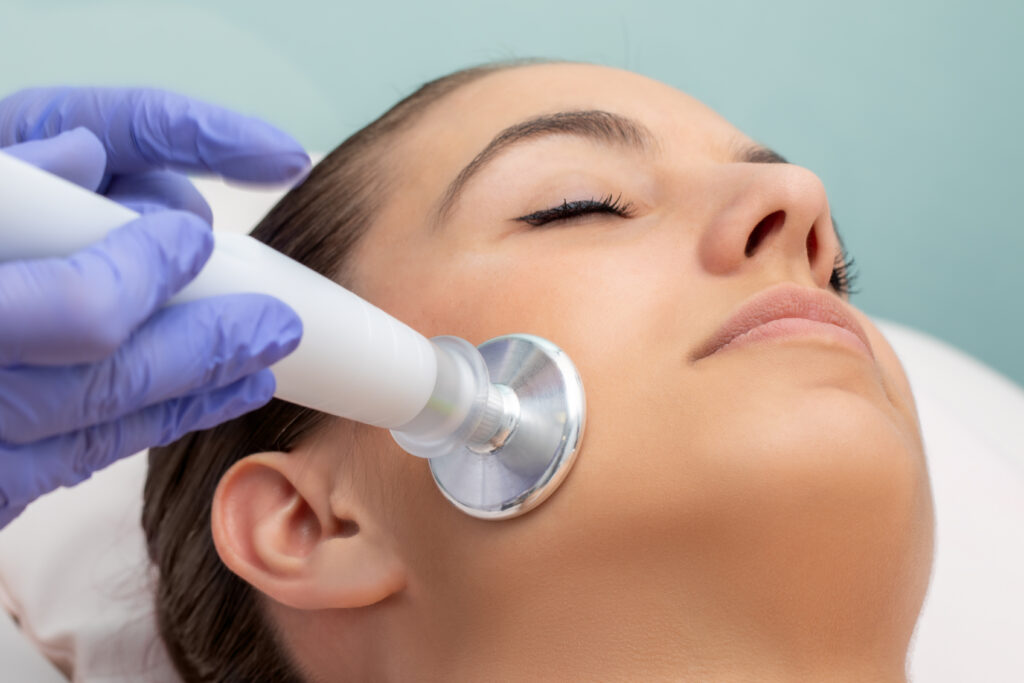
If you’ve noticed loose skin along your jawline, cheeks, or neck, you’re far from alone. Collagen naturally declines with age, and skin laxity is one of the most common concerns patients bring to FABrx Studio. The upside is that there are more non-surgical ways to address it than ever before.
Patients often come in already having seen a device name online, whether it’s XERF, Morpheus8, Thermage, Sofwave, or Ultherapy, and want to know how it stacks up. After walking hundreds of patients through that exact question, XERF is where we usually land, and here’s the honest reasoning behind it.
What Is XERF?
XERF is a dual-frequency monopolar radiofrequency treatment that combines 6.78 MHz and 2 MHz energy to firm, lift, and remodel collagen without surgery, needles, or downtime. Unlike devices that only reach a single depth of tissue, XERF heats multiple layers in a single session, using built-in safety technology to protect the skin’s surface and deeper fat, so your provider can drive real collagen stimulation while minimizing unwanted volume loss.
That combination—multiple tissue depths, no needles, and no numbing—is hard to match elsewhere on the market, which is exactly why it’s become one of the most requested treatments on our energy-based device menu.
How XERF Works, and Why the Results Hold Up
As we age, collagen and elastin, the proteins that keep skin firm, gradually decline. XERF’s controlled radiofrequency energy gently heats tissue to kick-start the body’s natural collagen remodeling process, which gives two benefits working together:
- Immediate tissue contraction: an early, visible tightening effect right after treatment
- Long-term collagen production: continued improvement over the following months as new collagen builds
Most patients tolerate XERF with minimal discomfort, no numbing cream, and no real downtime, which is the combination that keeps it at the top of our recommendation list.
XERF vs. Morpheus8
Morpheus8 is the other skin-tightening option available at FABrx Studio, and it solves a different problem than XERF. It combines microneedling with radiofrequency, using tiny needles to deliver heat directly into the deeper layers of the skin, making it genuinely effective for acne scarring, stretch marks, and uneven skin texture.
But if scarring or texture isn’t your main concern, the needles and several days of downtime that come with Morpheus8 are a trade-off you don’t need to make. XERF delivers meaningful firming without that trade-off, which is why it’s the better starting point for most patients seeking skin tightening rather than scarring.
| XERF | Morpheus8 | |
| Technology | Dual-frequency monopolar RF (6.78 MHz + 2 MHz) | Microneedling + radiofrequency |
| Needles involved | No | Yes, fractional microneedles |
| Numbing needed | No | Usually yes |
| Downtime | None to minimal | Several days of redness and swelling |
| Best for | Overall firmness, jawline and neck laxity | Acne scars, texture, fine lines |
Some patients still combine both, XERF for overall firmness and Morpheus8 for texture or scarring, but if you only need one, XERF is where most patients should start.
What About Thermage, Sofwave, and Ultherapy?
Here’s an honest look at the other names patients ask about and why XERF usually comes out ahead for general firming concerns.
- Thermage: a single-frequency monopolar RF treatment that only reaches one tissue depth per session. XERF’s dual-frequency design lets a single session reach multiple depths, which is the clearest reason patients weighing the two options tend to choose XERF.
- Sofwave: uses ultrasound rather than radiofrequency and typically requires numbing cream along with temporary warmth or discomfort during treatment. XERF is generally more comfortable and doesn’t require any numbing.
- Ultherapy: reaches the SMAS layer using focused ultrasound, but usually requires numbing cream and can be uncomfortable. XERF reaches meaningful depth with a noticeably easier in-office experience, which is why many patients prefer it.
- Surgical facelift: remains the gold standard for significant skin laxity and sagging, since a surgeon can reposition tissue and remove excess skin directly. For patients who aren’t at that stage yet, XERF is the practical, non-surgical place to start.
Why XERF Comes Out Ahead for Most Patients
Line up the options side by side, and the pattern is consistent. Compared to Morpheus8, Sofwave, and Ultherapy, XERF is the only one that skips both needles and numbing cream entirely. Compared to Thermage, it targets multiple tissue depths in a single session. And unlike a surgical facelift, it requires no anesthesia, no incisions, and no real recovery time.
That’s the case for XERF in one sentence: comparable firming benefit to several higher-discomfort or more-invasive options, without the downsides that come with them.
When Something Other Than XERF Might Make More Sense
XERF isn’t the right answer for every patient, and we’d rather tell you that upfront. If acne scarring or textural irregularities are your primary concern, Morpheus8’s microneedling component addresses that more directly. If your skin laxity is significant, with heavy sagging rather than early loss of firmness, a surgical consultation may serve you better than any non-surgical option, including XERF.
For everyone in between, which is most patients, XERF is the option we recommend evaluating first.
Ready to Get Started?
XERF, Morpheus8, and the other treatments covered here each address a different piece of the skin laxity puzzle, but for most patients seeking general firmness, XERF is the treatment that delivers the most benefit with the least trade-off.
Schedule a consultation with the FABrx Studio team, near Union Square, Greenwich Village, and Flatiron, to find out whether XERF is the right fit for your skin.
Frequently Asked Questions
For patients whose main concern is firmness rather than scarring or texture, XERF delivers meaningful tightening without needles, numbing, or the several days of downtime that come with Morpheus8. Morpheus8 remains the better choice when scarring or texture is the primary concern.
XERF and Ultherapy can both reach the SMAS layer, but XERF typically does it without the numbing cream Ultherapy requires, and most patients find it more comfortable. For most patients, XERF offers a similar depth of treatment with an easier overall experience.
Thermage treats a single depth of tissue per session, while XERF’s dual-frequency design reaches multiple depths at once. That difference is usually why patients weighing the two end up choosing XERF.
No. A surgical facelift remains the most effective option for significant skin laxity and sagging. XERF is best suited to mild to moderate laxity and is usually the right non-surgical starting point before considering surgery.
A consultation with a FABrx Studio provider can confirm whether XERF fits your skin and goals. For most patients dealing with general firmness concerns, it is the treatment we suggest trying first.